
Introduction
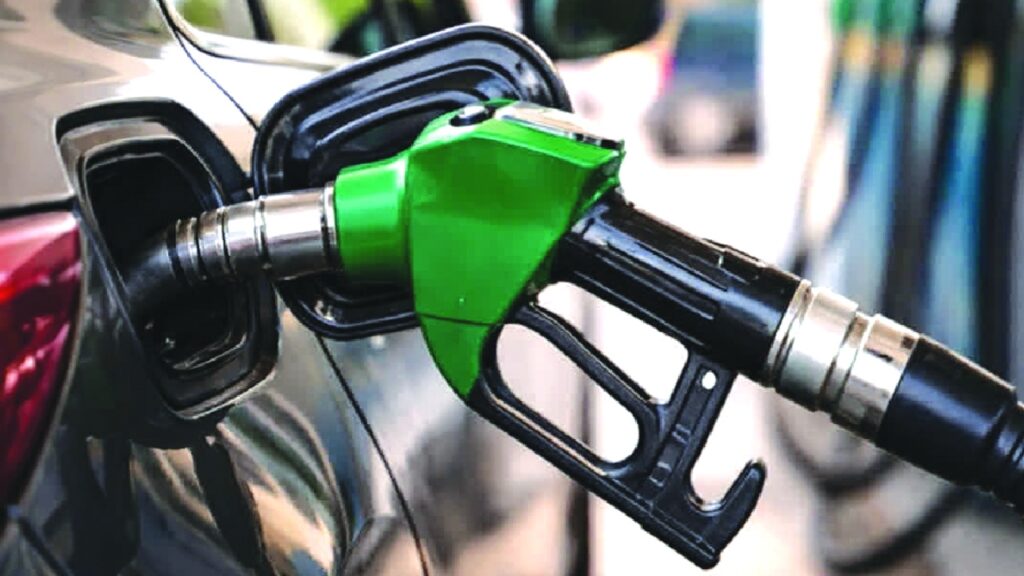
Every morning, millions of Indians start their day the same way stuck in traffic, burning petrol, watching the fuel gauge drop. It feels like a personal problem. But here is the truth: it is a national problem. India imports over 85% of its crude oil and spends more than $150 billion every year on it. That is money flowing out of the country weakening the rupee, inflating prices, and putting pressure on every Indian household.
Prime Minister Narendra Modi has publicly urged Indians and businesses to adopt Work From Home wherever possible not just as a lifestyle choice, but as an economic and environmental strategy. And the numbers back him up.
In this blog, we will break down exactly how Work From Home (WFH) can save India crores in fuel every year, why the government is concerned, and what each one of us can do right now to make a difference.
Why India’s Fuel Import Bill is a National Crisis
Before we talk about solutions, let us understand the scale of the problem.
India is the third-largest oil importer in the world, right after the United States and China. Every barrel of crude oil that India imports is paid for in US dollars. When global oil prices rise due to wars, geopolitical tensions, or OPEC decisions India bleeds more dollars.
Here is what that chain reaction looks like:
1. More oil imports → More dollars needed → Rupee weakens
2. Weak rupee → All imports become costlier → Inflation rises
3. Rising inflation → Higher prices for petrol, food, and goods → Common man suffers
This is not just an economic equation. It directly affects your grocery bill, your EMI, and your cost of living.
The Hidden Cost of Your Daily Commute
Let us bring it closer to home.
The average Indian urban commuter travels 30 to 40 kilometres per day to and from work. At an average fuel efficiency of 15 km per litre and petrol prices hovering around ₹100 per litre, that is roughly ₹200 per day, per person, just on fuel.
Now multiply that by:
1. 50 crore working Indians (approximate workforce)
2. Even if 10 crore of them commute by private vehicles
3. That is ₹200 × 10 crore = ₹2,000 crore spent on fuel every single working day
Over 250 working days a year, that is a staggering ₹5 lakh crore in annual fuel expenditure a massive chunk of which goes toward imported oil.
And this does not even account for the fuel burned by commercial vehicles, buses, and two-wheelers in the process.
How Work From Home Directly Reduces Fuel Consumption
When even a fraction of India’s workforce shifts to remote work, the fuel savings are massive.
1. Fewer Vehicles on the Road
Every car that stays in the garage means several litres of fuel saved that day. If 5 crore employees across India worked from home just 3 days a week, the cumulative fuel savings would run into thousands of crores every month.
2. Less Demand for Imported Crude Oil
Lower fuel consumption at the national level means India needs to import fewer barrels of crude oil. Less oil import means fewer dollars leaving the country, which directly helps stabilise the rupee.
3. Reduced Pressure on the Current Account Deficit
India’s Current Account Deficit (CAD) is heavily impacted by oil imports. A reduction in fuel demand even by 10–15% can make a measurable difference in the CAD, which in turn supports the overall health of the Indian economy.
4. Lower Carbon Emissions
Fewer vehicles on the road also mean fewer carbon emissions. India has committed to ambitious climate goals at international forums like COP26 and COP28. WFH is one of the simplest, most scalable ways to move toward those targets without major infrastructure investment.
What the Government Is Doing – and Why It Matters
The Indian government is not just asking citizens to work from home. It is working on multiple fronts to reduce the country’s oil dependency:
1. Promoting Electric Vehicles (EVs): The FAME scheme offers subsidies on electric two-wheelers, three-wheelers, and buses to reduce petrol and diesel consumption.
2. Expanding Renewable Energy: India is targeting 500 GW of renewable energy capacity by 2030, which will reduce dependency on oil for power generation.
Rupee Trade Agreements: India has been actively pushing for trade settlements in Indian rupees with countries like Russia, UAE, and others reducing the need to hold and spend US dollars on oil.
3. Domestic Oil Exploration: The government is investing in expanding domestic oil production through ONGC and other public sector units to reduce import dependency.
4. Metro and Public Transport Expansion: Expanding urban transit systems is a long-term strategy to get private vehicles off the road.
WFH fits perfectly into this national strategy. It is a zero-cost, immediate-impact solution that requires no infrastructure just a laptop, an internet connection, and willingness.
What Businesses Can Do Right Now
If you are a business owner or manager, here is how you can play your part:
- Adopt a hybrid work model – Even 2 to 3 WFH days per week makes a significant difference
- Invest in collaboration tools like Google Workspace, Microsoft Teams, or Zoho to make remote work seamless
- Measure productivity by output, not presence – India’s corporate culture still largely equates physical presence with hard work. It is time to change that mindset
- Reduce office energy consumption on WFH days – air conditioning, lighting, and other overheads also add to the national energy bill
- Offer flexible hours so employees can avoid peak-hour traffic on days they do come to office — this alone reduces fuel waste significantly
What You Can Do as an Individual
You do not need to be a policymaker to make a difference. Here is what every Indian can do starting today:
- Work from home whenever your job allows – even one day less commute per week adds up over a year
- Use public transport instead of a personal vehicle when commuting is unavoidable
- Carpool with colleagues who live nearby – split the fuel cost and the national burden
- Switch to an EV or CNG vehicle if you are planning to buy a new vehicle
- Buy Made in India products wherever possible – reducing unnecessary imports conserves foreign exchange
These may seem like small actions, but at a population of 140 crore, small actions create massive national impact
The Bigger Picture: Connecting WFH to Rupee Strength
Here is the connection that most people miss.
When India’s oil import bill goes down:
- Fewer dollars are needed
- Dollar demand falls → Rupee strengthens
- Strong rupee → Cheaper imports → Lower inflation
- Lower inflation → RBI has room to cut interest rates
- Lower interest rates → EMIs become cheaper → Economy grows
It is a positive chain reaction – and Work From Home is one of the triggers.

Real Numbers: How Much Can India Save?
Let us do a simple back-of-the-envelope calculation:

Even in the most conservative scenario, the savings are enormous – and that is only accounting for private vehicle fuel. Factor in reduced wear on roads, lower pollution healthcare costs, and reduced oil import payments, and the figure grows even larger.
Conclusion: Every Indian Has a Role to Play
India’s economic challenges – a weakening rupee, a rising oil import bill, and growing inflation — are not problems that only the government can solve. They are problems that require a national movement, and Work From Home is one of the most powerful tools in that movement.
Prime Minister Modi’s push for WFH is not just about convenience. It is about energy security, economic stability, and a stronger India.
The next time you open your laptop from home instead of driving to office, know this: you are not just saving your petrol money. You are saving India’s foreign exchange, strengthening the rupee, and contributing to a cleaner, more self-reliant nation.
Share this article with your colleagues, your employer, and your network. Because a stronger India begins with informed Indians.
[Link: Read more about India’s EV push and what it means for fuel savings]
[Link: How the falling rupee affects your everyday expenses]
[Link: Made in India – why buying local is a patriotic economic decision]
Frequently Asked Questions (FAQs)
Q1. How does Work From Home help India’s economy?
Ans: WFH reduces the number of vehicles on the road, which lowers fuel consumption. Since India imports over 85% of its crude oil, lower demand means fewer dollars spent on imports, which helps stabilise the rupee and reduces the current account deficit.
Q2. How much fuel can India save through widespread WFH adoption?
Ans: Even a conservative estimate suggests savings of over ₹10,000 crore annually if just 2 crore employees work from home one day a week. The savings scale significantly with higher adoption.
Q3. What is the connection between WFH and the rupee-dollar exchange rate?
Ans: India pays for oil imports in US dollars. Less oil demand means fewer dollars needed, which reduces the pressure on the rupee. A stronger rupee means cheaper imports and lower inflation for everyday Indians.
Q4. Is Work From Home only beneficial for the environment?
Ans: No. WFH has multiple benefits – it reduces fuel costs for individuals, lowers oil imports for the nation, cuts carbon emissions, eases traffic congestion, boosts productivity, and helps India work toward its climate commitments.
Q5. What can businesses do to support the WFH movement in India?
Ans: Businesses can adopt hybrid work models, invest in remote work technology, measure employees by output rather than physical presence, and encourage flexible working hours to reduce peak-hour traffic and fuel consumption.
Did you find this article useful? Share it with someone who commutes to work every day. Together, small changes create a national difference.
