
Hanuman Ansh has become one of the biggest sleeper hits in Indian box-office history. But how much of the film is fact, and how much is dramatization? Here’s the real, fact-checked history of Neem Karoli Baba.
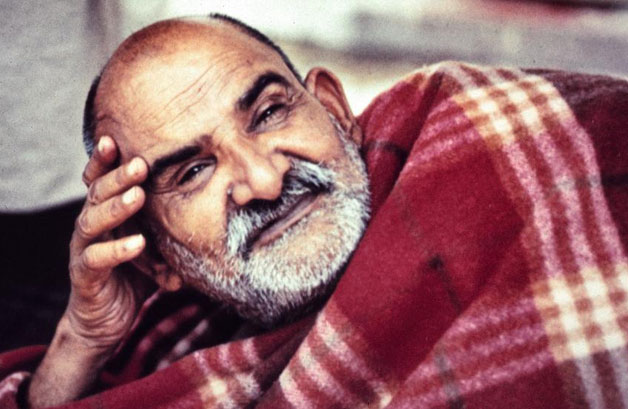
A film made on a shoestring budget of roughly ₹2 crore opened to near-empty theatres. Four weeks later, it was pulling in over ₹12 crore in a single day and had crossed ₹100 crore at the box office a return of more than 50 times its budget, with no big stars, no marketing blitz, and zero controversy driving it.
That film is Hanuman Ansh, and the reason it’s spreading the way it is has little to do with cinema and everything to do with the man it’s about: Neem Karoli Baba, the barefoot saint from the hills of Uttar Pradesh whose devotees, decades after his death, still include tech billionaires, Bollywood stars, and cricket icons.But here’s the question everyone searching for this topic actually wants answered: how much of Hanuman Ansh is real, and how much is cinematic liberty?
- What Is Hanuman Ansh, Exactly?
- Why Is Everyone Suddenly Talking About It?
- The Real Neem Karoli Baba: Early Life
- The Train Incident That Made Him “Neem Karoli”
- Kainchi Dham and the Life of Seva
- Fact-Check: What’s True vs. What’s Dramatized in the Film
- The Steve Jobs, Zuckerberg and Julia Roberts Connection – Myth vs. Reality
- FAQs About Hanuman Ansh and Neem Karoli Baba
What Is Hanuman Ansh, Exactly?
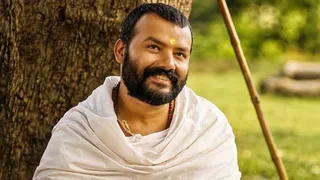
Hanuman Ansh (meaning “Fragment of Hanuman”) is a 2026 Hindi biographical devotional drama written and directed by Dr. Vishal Chaturvedi, a former doctor turned filmmaker, under his banner Swambhu Media Network. It’s based on his own memoir, Divine Detour: That Changed My Life, and stars Shobhinaw Satyaa as young Neem Karoli Baba, alongside Chandan Anand and Purnima Tiwari.
The film covers only the early life of Maharaj-ji from his boyhood in Firozabad, through the loss of his mother, to the beginning of his life as a wandering seeker. It is the first of a planned trilogy; the next instalment, already in production, will cover his years in Agra and Mathura.
Importantly, the makers themselves have been upfront that this is not a documentary. It’s a devotional interpretation, inspired by recorded devotee accounts, built around emotion and faith rather than a strict historical record.
Why Is Everyone Suddenly Talking About It?
A few reasons this film has become a genuine phenomenon rather than just another devotional release:
- It’s on track to be remembered as one of the highest return-on-investment films in Indian box-office history, made for around ₹2 crore and earning well over ₹100 crore.
- The Uttarakhand government made it tax-free in the state after the Chief Minister watched it in Dehradun.
- International distribution rights were picked up by Hombale Films, with an overseas release following shortly after its domestic run took off.
- It rode entirely on word of mouth — no big stars, no promotional blitz — which is rare in an industry built on marketing spend.
In short: a low-budget spiritual film about a relatively obscure (outside devotee circles) 20th-century saint outperformed films with ten times its marketing budget. That’s a story in itself.
The Real Neem Karoli Baba: Early Life
Now to the man behind the movie.Neem Karoli Baba was born Lakshmi Narayan Sharma, around the year 1900, in the village of Akbarpur in what is now the Firozabad district of Uttar Pradesh, into a well-off Brahmin family. Records from this period are limited, so his exact birth date is uncertain – historians and devotee accounts alike simply place it “around 1900.”
At the age of 11, in line with the customs of the time, his parents arranged his marriage to a girl named Ram Beti. But even as a boy, he felt a strong pull away from worldly life. Shortly after, he left home to become a wandering sadhu, adopting the name Lakshman Das, and travelled across northern India for over a decade, living without food or shelter guarantees, meditating, and undertaking severe austerities.
His father eventually tracked him down years later after hearing about a young ascetic who resembled his son. He persuaded him to return home – and from that point on, Neem Karoli Baba lived what devotees describe as two parallel lives: that of a householder (he eventually had two sons and a daughter) and that of a wandering monk, moving between the two for years.
This detail – a saint who didn’t renounce family life in the conventional sense — is one of the things that makes his story different from the more familiar “born enlightened, renounced everything” narrative common to Indian hagiography.
The Train Incident That Made Him “Neem Karoli Baba”
One of the most repeated stories about Maharaj-ji – and one the film leans into – is the incident that gave him his popular name.
According to devotee accounts, Baba was once travelling by train without a ticket and was forcibly removed by a conductor at a station near the village of Neeb Karori (also spelled Neem Karoli). What happened next depends on which version you hear: the most common account claims the train refused to move until he was allowed back on board, and that officials eventually relented, seeing it as a sign of his spiritual power. Following the incident, he asked that a station be built in the village – and from then on, he became known by the name of that village: Neem Karoli Baba.
It’s important to be clear about how to read this: this story survives almost entirely through oral devotee tradition, not independent contemporary records. There’s no way to verify a stalled train mechanically or otherwise, and accounts of the exact details (why it stopped, how long, what was said) vary from source to source. Whether you take it literally, symbolically, or as a legend that grew around a genuinely compelling personality is, honestly, a matter of faith rather than fact and that’s fine. Most saint biographies across traditions carry stories like this one.
Kainchi Dham and the Life of Seva
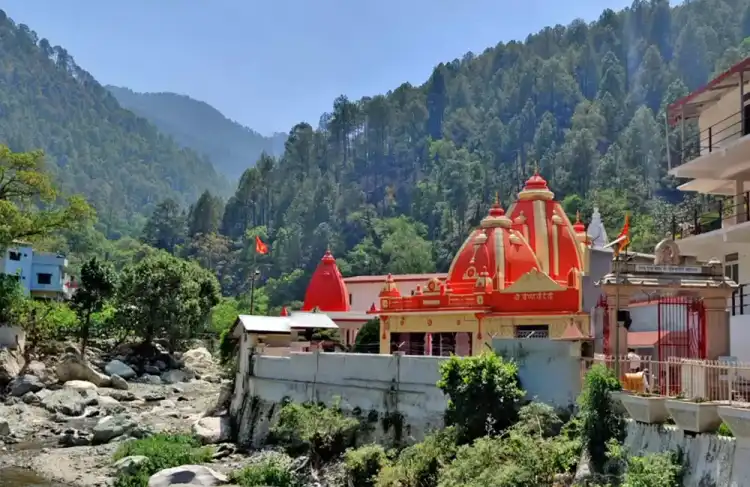
What’s much better documented is his adult life of seva (selfless service). Neem Karoli Baba established several ashrams across northern India, the most famous being Kainchi Dham in the Kumaon hills of Uttarakhand – now one of the most visited spiritual sites in the region.
His core teaching was strikingly simple, especially compared to more ritual-heavy spiritual traditions:
- “Sub Ek” – all is one; the same divine essence runs through every being.
- Love everyone, serve everyone, remember God.
- Devotion didn’t require renunciation, elaborate rituals, or years in isolation – just consistent love and service in ordinary life.
This simplicity is a big part of why his teachings have travelled so well outside India and across generations, including to audiences who aren’t traditionally religious at all.
Fact-Check: What’s True vs. What’s Dramatized in the Film
Since this is the question most people are actually searching for, here’s a straightforward breakdown:
| Claim in/around the film | Verdict | Notes |
| Neem Karoli Baba left home young in search of a spiritual path | True | Widely documented across devotee and biographical sources. |
| The film is a documentary of his life | False | The makers themselves describe it as an inspired dramatization, not a factual biopic. |
| He performed literal miracles as shown in some devotional retellings | Unverifiable | These are matters of religious belief passed down by devotees, not independently documented events. |
| His teachings centered on love, service, and unity (“Sub Ek”) | True | Consistently documented across all serious biographical sources. |
The honest takeaway: the film is inspired by real events and real teachings, but like almost every biographical drama Bollywood or Hollywood – it compresses timelines, dramatizes emotions, and fills gaps in the historical record with narrative choices. That doesn’t make it dishonest; it makes it cinema.
The Steve Jobs, Zuckerberg and Julia Roberts Connection – Myth vs. Reality
This is where a lot of viral WhatsApp-forward-style claims need correction.
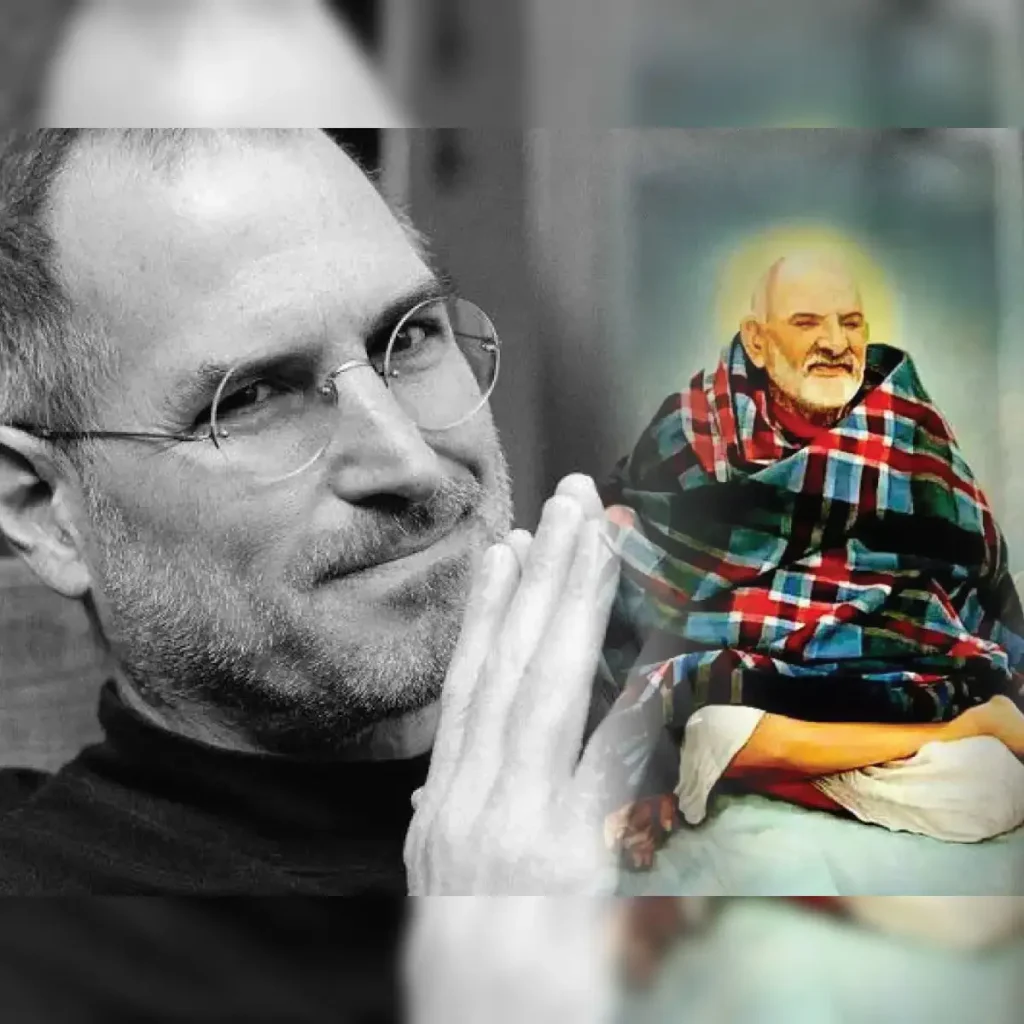
Steve Jobs: Jobs did travel to India in 1974 specifically hoping to meet Neem Karoli Baba. However, Maharaj-ji had already passed away in 1973, so the two never actually met. Jobs’s trip still deeply shaped his interest in simplicity, intuition, and Eastern spiritual thought – but the popular claim that “Baba Ji personally guided Steve Jobs” is not accurate.
Mark Zuckerberg: Zuckerberg has spoken publicly, including at a 2015 town hall with the Indian Prime Minister, about visiting a temple associated with Neem Karoli Baba’s tradition during a difficult early period at Facebook, on advice from Jobs. This connection is real, though it came years after Baba’s death, through his broader legacy rather than a direct meeting.
Julia Roberts: Roberts has spoken about feeling drawn to a photograph of Neem Karoli Baba, which contributed to her interest in and practice of Hinduism. This is a documented statement from Roberts herself, not a fabricated claim though again, it’s an emotional and spiritual connection, not a personal meeting.
The real chain, accurately told: American psychologist Richard Alpert met Neem Karoli Baba in 1967, took the name Ram Dass, and wrote the influential book Be Here Now – which is genuinely the bridge that carried Maharaj-ji’s teachings to the West, influencing tech and cultural figures for decades afterward, largely through his writing rather than in-person encounters.
So: the influence is real and well-documented. The idea that he personally mentored Silicon Valley’s biggest names is an exaggeration that grew with retelling – a good reminder to separate “his teachings reached them” from “he met them.”
His Death and the Mystery Around It
Neem Karoli Baba passed away on 11 September 1973 in Vrindavan. Devotee accounts describe his final hours as unusually calm — that his medical reports showed no clear illness, and that he chose to be alone, removed his oxygen mask, and passed peacefully on his own terms. As with the train story, this account comes from devotee testimony rather than independently verified medical records, and is best understood as part of his spiritual legacy rather than a clinically confirmed fact.
Today, September 11 is marked every year by devotees as his mahasamadhi anniversary, with the Vrindavan ashram holding an annual Mahasamadhi Bhandara around Anant Chaturdashi.
Q1. Is Hanuman Ansh based on a true story?
It’s inspired by the life and teachings of Neem Karoli Baba, built on devotee accounts and the director’s own book – but it is a dramatized devotional film, not a documentary.
Q2. Who is Neem Karoli Baba in real life?
He was an Indian Hindu guru, born Lakshmi Narayan Sharma around 1900, best known for his devotion to Hanuman, his simple teachings on love and service, and the Kainchi Dham ashram he established in Uttarakhand.
Q3. Did Steve Jobs actually meet Neem Karoli Baba?
No. Jobs travelled to India in 1974 hoping to meet him, but Baba had already passed away in 1973.
Q4. Why is Neem Karoli Baba called by that name?
According to devotee tradition, he was thrown off a train near the village of Neeb Karori, and the train wouldn’t move again until he was allowed back on after which he became known as Neem Karoli Baba. This account is passed down through oral tradition rather than independent records.
Where can I watch Hanuman Ansh?
As of its theatrical run, no OTT or streaming release date has been officially announced.
Final Thoughts:
Hanuman Ansh’s success says something bigger than box-office numbers: audiences are hungry for stories about simplicity, service, and faith – told honestly, without spectacle. The real Neem Karoli Baba wasn’t a miracle-working fictional character; he was a man who wandered, doubted, married, raised a family, and eventually built a philosophy around one idea – love and serve everyone, remember God – that continues to pull in seekers from Kumaon villagers to Silicon Valley founders, more than fifty years after his death.
The film takes creative liberties, as every biographical drama does. But the message at its core – and the man who inspired it is very real.
